
Royalties still depend on manual work
Spreadsheet calculations can lead to 2–5% royalty overpayments or underpayments, which becomes material across a large portfolio.
 Flux Energy
 connects plant data, maintenance, contracts, settlement, treasury, and compliance. Your teams can work from the same information instead of reconciling a different spreadsheet for every decision.
Flux Energy brings construction, operations, finance, and workforce management into one place. The work stays connected from site selection through settlement, with an audit trail along the way.

Here is what that looks like for the people running the portfolio and the landowners who depend on it.
Run the monthly settlement without rebuilding formulas and checking versions for weeks. Calculate the batch, review it, and send it for approval.
Give reviewers and landowners a clear calculation they can follow back to the source, without hidden adjustments or mystery formulas.
Keep the source data and calculation steps with the settlement, so finance and regulatory teams do not have to hunt through folders when a question comes up.
See where production was lost and which assets need attention while there is still time to respond.
Track the interconnection queue, commissioning work, and budget against the same build record as a project moves toward commercial operation.
Keep certifications, field crew dispatch, and access for 20 built-in roles together, so people can get to the work they are responsible for.
The challenge
The problem is usually not a lack of data. It is that operations, finance, and land teams are working from different versions of it.
Spreadsheet calculations can lead to 2–5% royalty overpayments or underpayments, which becomes material across a large portfolio.
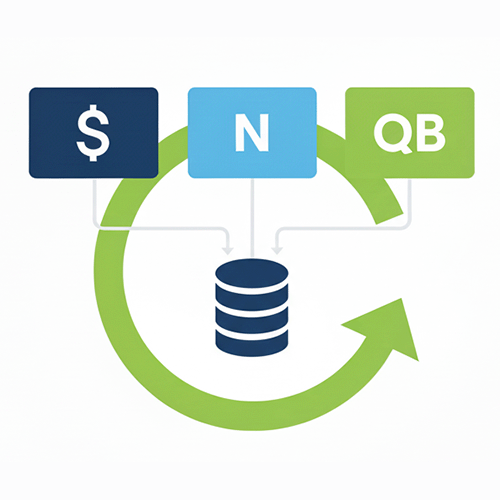
SCADA data, land contracts, and financial records live in separate tools. Each month, someone has to reconcile them by hand.
Without a locked calculation trail, a straightforward question can turn into days of searching through files, emails, and old workbook versions.
Teams can see that generation missed budget without being able to pinpoint the cause or decide where maintenance effort will recover the most output.
What Flux Energy replaces
Keep the systems that matter. Replace the spreadsheets, exports, and homegrown tools people use to bridge the gaps between them.
Manual royalty calcs, pivot tables, endless version-controlled spreadsheets
Replaced by Settlement Engine
Heavyweight ERP not built for royalty logic or landowner portals
Replaced by Settlement + GL module
Oil & gas land management tools misapplied to renewable royalties
Replaced by full platform
Homegrown royalty trackers with no audit trail or scalability
Replaced by Settlement Engine
Raw CSV exports processed by hand. Error-prone and delayed.
Replaced by SCADA integration
Flux Energy follows the work across teams, from development and SCADA through settlement, treasury, markets, and HR.
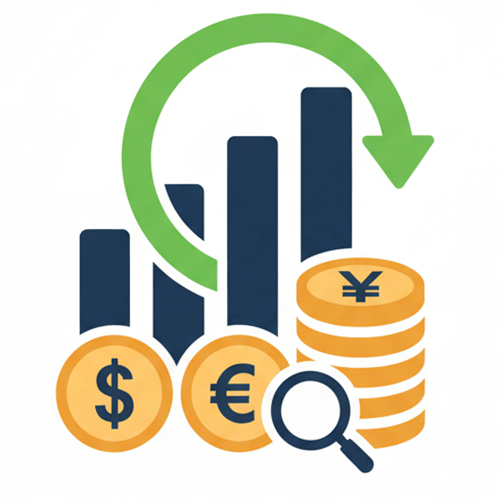
Production from SCADA and metering feeds deterministic royalty runs: CPI and curtailment-aware logic, multi-currency, calculation packages, and batch-ready outputs for treasury.
Keep obligations, amendments, landowner information, and documents together, where finance and field teams can work from the same contract record.
GL, treasury, invoicing, and export paths toward QuickBooks, plus REST APIs and webhooks for the systems you already run.

Tenant-isolated workspaces, granular RBAC (role-based access control), MFA, SSO options, and audit trails support the way larger portfolio teams divide responsibility.
Real-time SCADA feeds, predictive maintenance, and health scoring across your fleet. TurbineIQ™ loss attribution helps explain where MWh went missing.
Work with 14+ ISO/market adapters, SAM-aligned bankability models (P50/P90, ITC/PTC), regulatory filings, and insurance and risk records alongside settlement.
Follow permits, budget versus spend, contractors, the interconnection queue, and repowering plans from site selection through commissioning.
Full employee lifecycle, org charts and RBAC across 20 built-in roles, GWO/safety certification tracking, field crew dispatch, and Workday sync.
Features
Compare met mast and LiDAR data across layouts, then carry the selected resource case into financing.
Read morePlan wind and storage together, account for battery wear, and carry dispatch into settlement.
Read moreHourly prices from every ISO, recurring constraint windows learned from your own history, bids and trades posted to one ledger.
Read moreBuild SAM-aligned P50/P90 models and trace key figures to the operating records behind them.
Read moreApply contract terms to production, review the calculation, and carry the result into payment.
Read moreSchedule the curtailment, capture the cost, and use the event in settlement and compliance.
Read moreThe full data pipeline, market context, and TurbineIQ™ in one detailed walkthrough.
Read moreYear-one value model and how Flux Energy compares on renewable royalties versus legacy categories.
Read moreReference architecture, layered controls, SOC 2 aligned controls, and a 90-day rollout.
Read moreYou’ll work directly with the people building Flux Energy. In the first session, we’ll look at your assets, the way your team works today, and where the process is breaking down.